
You know that sinking feeling. You're sending money to family overseas, paying a freelancer in another country, or maybe just trying to transfer your savings to a foreign account. You hit "confirm," and a few days later, the recipient messages you: "Wait, this is less than what you said you were sending."
Cue the frustration.
You check the receipt, and there it is—not just the fee they told you about upfront, but the sneaky, almost invisible markup on the exchange rate that somehow ate away 3% of your transfer. It feels like theft, honestly.
That’s exactly the problem Wise set out to solve over a decade ago. Today, over 15 million people use it to move money across borders. But here’s the million-dollar question: is Wise actually worth it for your money, or is it just another fintech with good marketing?
Let’s break it down—no jargon, no fluff, just the real numbers and what they actually mean for your wallet.
How Wise Works — and the Fee Banks Hope You Don’t Notice
Here’s something most people don’t realize until they’ve been burned a few times: the transfer fee you see isn’t the whole cost.
Let me show you what I mean.
Imagine the real, mid-market exchange rate right now is:
£1 = €1.17
That’s the rate you’d see if you typed “GBP to EUR” into Google. It’s the true value of the money.
Now, your bank or payment provider? They don’t have to give you that rate. They might offer you:
£1 = €1.14
That three-cent difference looks tiny, right? On £100, you’d barely notice. You might lose a couple of quid and move on with your day.
But here’s where it gets painful.
If you’re sending £1,000? You’ve just lost £30 to thin air. £5,000? That’s £150 gone. And if you’re a freelancer getting paid monthly in dollars, or a small business paying overseas suppliers every week, those small differences compound into hundreds or even thousands of pounds over a year.
This sneaky gap has a fancy name: it’s called an exchange-rate markup or “spread.” But really, it’s just the bank’s way of making money off you without being upfront about it.
Here’s the trap: a provider can advertise a “zero-fee transfer” all day long. Sounds amazing, right? But if they’re quietly shaving 2–3% off the exchange rate, they’re still profiting—and you’re still losing.
Wise flips this entirely.
Instead of hiding profit in the exchange rate, Wise says: “We’ll give you the real mid-market rate—the same one you see on Google. No markup. No games.”
Then they show you their fee separately, right upfront, before you confirm anything.
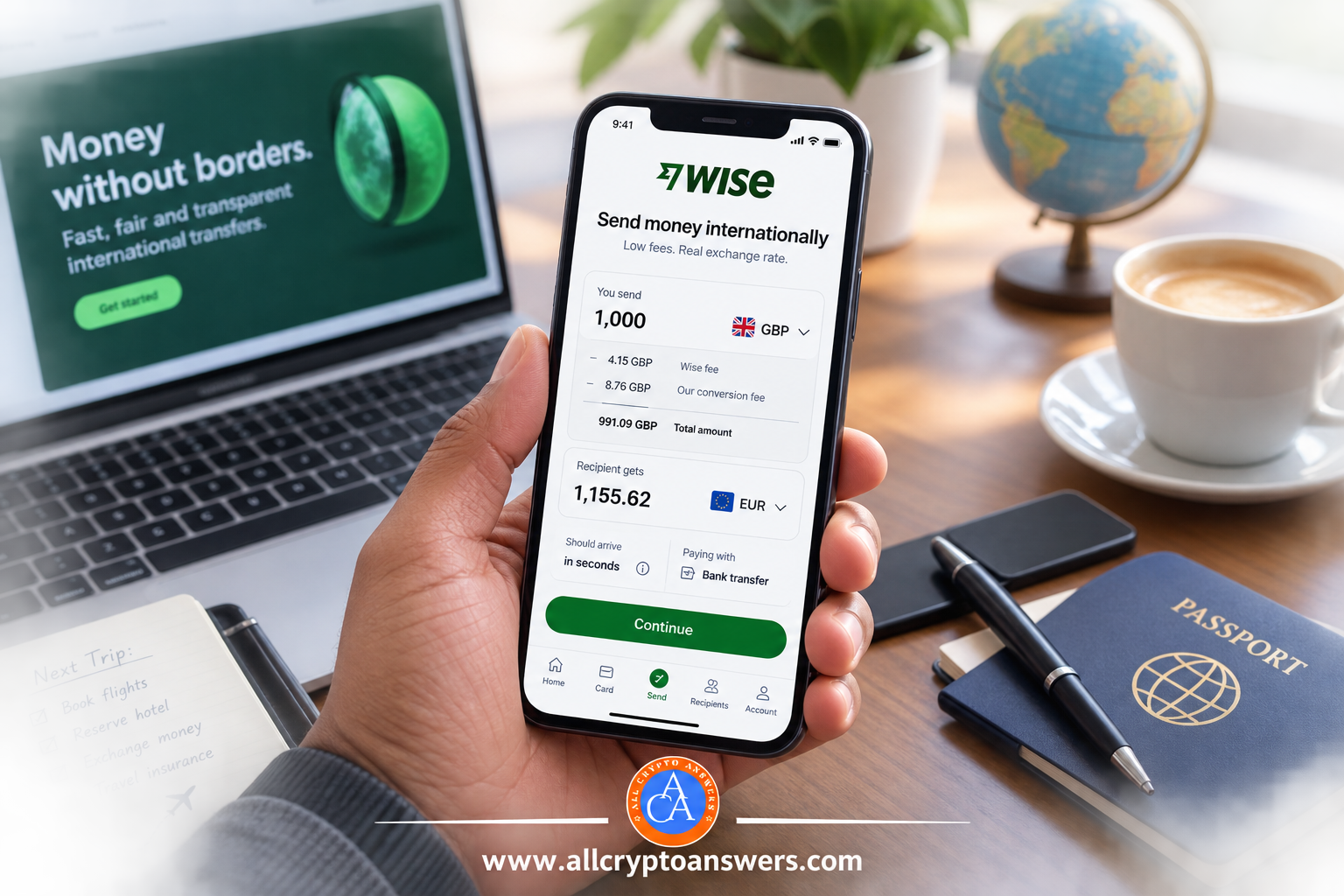
So when you use Wise, you see:
- Exactly how much you’re sending.
- The exact exchange rate you’re getting.
- The exact fee they’re charging.
- The exact amount your recipient will receive.
That’s it. No guessing. No surprises.
This matters because it makes comparison genuinely simple. You’re not comparing marketing gimmicks or hidden math. You’re comparing one final number: how much actually lands in the recipient’s account.
That’s the only question that counts.
Not “Who has the lowest advertised fee?”
But:
“For the same amount leaving my account, how much will the other person actually get?”
Ask that question, and suddenly the whole game changes.
Wise Fees: How Much Does It Actually Cost?
Here’s the honest answer: there’s no single fee.
Your cost depends on a few things—how much you’re sending, which currencies are involved, and how you’re funding the transfer (bank transfer, card, etc.).
Wise’s pricing pages currently show conversion fees starting from around 0.33% in some markets. Sounds cheap, right? And it often is.
But here’s the catch: that percentage can be higher depending on your specific currency pair. Don’t assume that because someone paid 0.33% to convert pounds into euros, you’ll pay the same converting dollars into Kenyan shillings, Australian dollars into pounds, or any other less-common pair.
The good news? Wise shows you the full cost upfront. Every single time. Before you confirm anything, you see exactly what you’re paying. No surprises. No “oh, by the way” charges.
Here’s a trap worth watching out for—and it’s a classic.
Let’s say you want to send $5,000 overseas.
Provider A advertises:
Transfer fee: $0
Wise quotes:
Transfer fee: $25
At first glance, Provider A looks like the winner. Free money, right?
Now look closer.
Provider A quietly gives you a worse exchange rate. Your recipient ends up with the equivalent of $4,850.
Wise gives you the mid-market rate and charges that transparent $25 fee. Your recipient gets the equivalent of **$4,975**.
Suddenly that “free” transfer cost your recipient $125 more than Wise’s paid one.
That’s the trap. That’s why you always compare the final amount the recipient actually receives—not the headline fee.
Wise themselves will tell you the same thing. They actively encourage customers to compare the mid-market rate, the explicit fee, and the final recipient amount. Not one number in isolation.
How Fast Is Wise?
Cost matters, sure. But if you’re sending rent, paying a contractor, helping a family member, or settling an urgent invoice—speed matters just as much.
Wise defines an “instant” transfer as one arriving within 20 seconds. And according to their current figures, 74% of transfers hit that mark.
If yours isn’t instant? Their data shows roughly 95–96% of transfers arrive within 24 hours.
That’s impressive. But—and this is important—those are averages, not guarantees.
Your actual transfer time can depend on:
- The currencies you’re converting.
- How you funded the payment.
- Banking hours and holidays.
- Any compliance or verification checks.
- The recipient’s own banking system.
So don’t assume every transfer will land in 20 seconds. Check the estimated delivery time Wise shows you for your specific transaction before you confirm. They give it to you for a reason—use it.
Wise Is More Than a Money-Transfer App
If you only use Wise to send £100 abroad once a year, you’re barely scratching the surface.
The Wise account is built for people who live, work, or operate across currencies on a regular basis. Eligible users can hold 40+ currencies and convert between them using that same mid-market rate we talked about earlier.
Here’s where it gets useful.
Imagine you’re a freelancer based in the UK with clients in the US and Europe. Instead of converting every single payment into pounds the moment it lands—and eating conversion fees each time—you can receive and hold dollars and euros in your Wise account. Convert them when the rate is favourable. Use them for international expenses. Pay suppliers, book flights, or spend abroad without constantly losing money to exchange fees.
That flexibility is a game-changer for anyone juggling multiple currencies.
What about the Wise card?
Where it’s available, the Wise card takes this multi-currency setup and puts it in your pocket—literally.
If you’re travelling and already holding the local currency in your Wise account, the card spends from that balance. No conversion needed. If you don’t have the local currency, Wise converts using the mid-market rate and charges the applicable fee. No hidden markups. No “dynamic currency conversion” scam at the checkout.
For frequent travellers, digital nomads, and anyone buying from foreign merchants, that makes the Wise account considerably more useful than a basic transfer-only service.
One quick heads-up: availability varies by country. Not every feature is available everywhere. So before you open an account, it’s worth checking what’s offered where you live.
If you’re curious what rates and account options are available in your region, it takes about two minutes to check.
Ready to explore Wise and see what your account would look like? You can start here.
Affiliate disclosure: The link above is an affiliate/referral link. I may receive a benefit if you sign up or qualify through it, at no additional cost to you. Always compare the live rate, fees and amount received before making a transfer.
Is Wise Safe?
Now for the question that’s probably sitting at the back of your mind.
Any company asking you to send thousands of dollars through an app deserves scrutiny. Completely fair.
So here’s the reality: Wise isn’t some unregulated website moving money around the internet. In the UK, Wise Payments Limited is authorised by the Financial Conduct Authority (FCA) as an Electronic Money Institution under the Electronic Money Regulations 2011. They also operate under regulators in other countries where they offer services.
But here’s the key distinction—and it’s an important one.
Wise is not a traditional bank.
That means your money isn’t protected by the UK’s Financial Services Compensation Scheme (FSCS) in the same way eligible bank deposits are. If your high street bank goes bust, the government protects up to £85,000 of your money. Wise doesn’t have that safety net.
Instead, Wise uses something called safeguarding.
Here’s what that actually means: customer funds are kept completely separate from the money Wise uses to run its business. They sit in dedicated accounts with financial institutions. If Wise were to go under, those safeguarded funds should be returned to customers before anyone else gets paid.
It’s not quite the same as FSCS protection, but it’s a serious and regulated framework.
The takeaway? Understand the difference rather than assuming “Wise is just as safe as a bank.” They’re different models with different protections. For most people using Wise for transfers and everyday spending, that’s perfectly fine—but it’s worth knowing exactly what you’re dealing with.
Account Security: What’s Protecting Your Money?
We’ve covered the regulatory side—now let’s talk about something more immediate: keeping your actual account safe.
Wise uses two-step verification (2SV) as an extra layer of protection beyond just your password. Depending on where you live and what features are available, you can set up verification through:
- Passkeys.
- Approval via the Wise app itself.
- Authenticator apps like Google Authenticator.
- SMS or phone verification.
That’s good practice. But—and I have to say this—no financial platform is immune to scams, phishing, or account takeover attempts. Wise gives you the tools, but you still need strong passwords and good security habits. Don’t reuse passwords across sites. Don’t click suspicious links. The usual stuff.
Think of it this way: Wise builds the vault, but you still need to lock the door.
What Do Customers Actually Say?
As of September 2026, Wise has roughly 299,000 reviews on Trustpilot with a rating around 4.3 out of 5.
That’s a huge sample size. Look, online reviews aren’t perfect—happy customers don’t always leave reviews, and unhappy ones often do. But nearly 300,000 reviews give you a much clearer picture than a handful of testimonials from a newer or smaller company.
It tells you something: most people who use Wise are genuinely satisfied. That doesn’t mean you shouldn’t do your own research—you absolutely should—but it’s a strong signal of trust and reliability.
Wise vs Banks: Is It Actually Worth Switching?
This is where the question at the heart of this article really lands.
Traditional banks are excellent at many things. They offer current accounts, credit cards, mortgages, savings products, and a whole ecosystem of services Wise isn’t trying to replace. If you need a loan, a bank is your answer. If you need to transfer money internationally? That’s a different story.
International currency conversion is an area where bank pricing becomes deliberately difficult to understand. They combine an exchange-rate spread with separate transaction fees, intermediary bank fees, and sometimes even receiving bank fees. Good luck unpicking that.
Wise’s advantage is transparency. You see the mid-market rate. You see their fee. You see exactly what the recipient gets. All upfront. No hidden layers.
Here’s the honest take:
- Sending money internationally once every few years? The difference between Wise and your bank might not transform your finances. It might be a tenner or two. Not life-changing.
- A company converting $50,000 every month? An e-commerce seller receiving revenue in multiple currencies? A freelancer repeatedly converting foreign income? Suddenly, those small percentage differences become hundreds or thousands of pounds over a year. That’s real money.
For frequent international transactions, this is arguably where Wise’s proposition becomes strongest.
Wise vs Revolut: Which One Wins?
Wise and Revolut overlap, but they’re not the same product.
Revolut has evolved into a broader financial app with banking-style features in supported markets. It offers trading, crypto, budgeting tools, and lifestyle perks. Wise, by contrast, remains heavily focused on international money movement and multi-currency management. It does one thing really well rather than trying to be everything to everyone.
Pricing also depends on your plan and location. Revolut, for example, has historically charged weekend foreign-exchange fees on some plans while offering reduced or zero weekend fees on certain paid tiers.
That doesn’t make Wise automatically cheaper. It means you need to compare the actual rate and fees that apply to your specific account, currency pair, and transaction time.
The bottom line?
- If international transfers and transparent currency conversion are your priorities, Wise is easier to understand and harder to beat.
- If you want a wider package of lifestyle and financial features—trading, crypto, travel insurance, budgeting—another fintech like Revolut might suit you better.
Wise vs PayPal: Convenience vs Cost
PayPal has one enormous advantage: convenience.
Millions of consumers and businesses already have PayPal accounts. Its merchant ecosystem makes online payments simple. It’s everywhere. It’s familiar. It just works.
But convenience and cheap currency conversion aren’t the same thing.
PayPal itself openly explains that currency-conversion costs can come from exchange-rate markups. That’s their model—it’s how they make money on international transactions.
Here’s the takeaway:
- If you simply need to pay an online merchant quickly, PayPal’s convenience probably wins. No question.
- If your primary objective is converting and moving money internationally while clearly seeing the exchange rate and fee upfront, Wise’s pricing structure is significantly more attractive.
Don’t assume the most familiar platform is also the least expensive. Check the numbers.
Wise for International Travellers
Frequent travellers are among the people most likely to appreciate Wise. Why?
Because international travel creates multiple opportunities for currency costs:
- Airport exchange desks with terrible rates.
- Foreign ATM withdrawal fees.
- Card conversion charges.
- Dynamic currency conversion scams at merchants.
A multi-currency account changes the equation. You can convert money before you travel, hold supported foreign currencies, and spend through the Wise card where it’s available. No airport kiosk. No surprise fees.
One important rule still applies: always check ATM fees and limits. Wise’s card withdrawal allowances and charges vary by market. Plus, the ATM operator can impose its own fee independently of Wise. So Wise can reduce international spending costs—but it doesn’t magically make every foreign ATM free.
Wise for Freelancers and Remote Workers
This is where Wise really shines.
Consider a freelancer who lives in one country, bills a US client in dollars, and works with another European client paying in euros.
The traditional workflow? Receive foreign payments through a bank or payment processor, convert each one into your domestic currency immediately, and eat the conversion fees every single time.
With a multi-currency Wise account, that changes.
You can receive supported currencies using available account details. Hold those currencies. Decide when conversion makes sense—when the rate is in your favour, not when the client happens to pay.
Wise lets you hold more than 40 currencies. That makes it potentially valuable not merely as a cheaper transfer service, but as part of a freelancer’s international financial infrastructure.
(Note: which currencies can be received using local or international account details varies by location. Check what’s available in your country.)
Is Wise Business Worth It?
For businesses, the potential savings become more interesting—because transactions repeat.
Think about an online company that:
- Receives customer payments in USD.
- Pays a developer in EUR.
- Pays a supplier in GBP.
- Operates primarily in another currency.
Constantly routing everything through one domestic currency creates unnecessary conversions. You’re paying fees every single time money moves. It adds up fast.
Wise Business allows eligible companies to send, receive, hold, and convert supported currencies—with the same transparent pricing model we’ve been talking about throughout this article. No hidden exchange markups. No surprises.
One extra perk: volume discounts. Once your conversion volumes cross specified thresholds, Wise offers better rates. The exact threshold and pricing depend on your market, but if you’re moving serious money, it’s worth looking into.
Who is Wise Business particularly good for?
- Freelancers and agencies receiving money from overseas clients.
- E-commerce businesses receiving foreign-currency marketplace revenue.
- SMEs paying international contractors and suppliers.
- Remote companies with workers distributed across countries.
- Importers and exporters regularly converting between major currencies.
That’s a wide range. But here’s the caveat.
If your transaction sizes become extremely large or your treasury requirements become complicated—think multinational-level FX exposure—it’s worth comparing Wise against specialist foreign-exchange providers. They offer tools like forward contracts and dedicated account managers that Wise doesn’t.
For most small to medium businesses? Wise is a solid fit. For a global corporation hedging millions? Probably not.
When Might Wise NOT Be Worth It?
A balanced review needs to acknowledge where Wise isn’t the answer. Here’s the honest truth.
- You’re making one tiny transfer
If you’re sending a small amount once and already have access to another low-cost method, opening and verifying a Wise account might not be worth the effort. Compare the final amount received before deciding. Sometimes the convenience of what you already have wins.
- Another provider is cheaper for your exact route
Wise’s transparent pricing doesn’t guarantee they win every comparison. Currencies, funding methods, and promotions vary. If a regulated competitor can deliver more money to your recipient for the same total cost, choosing them is perfectly rational.
Loyalty isn’t the goal. Keeping more of your money is.
- You need cash deposits
Wise is fundamentally digital. It doesn’t support cash or cheque payments the way a branch-based bank can. If you regularly handle physical cash, you’ll still need another financial institution.
- You need traditional lending and banking products
Wise isn’t designed to replace every part of a full-service bank. If you need mortgages, personal loans, or other traditional banking products, you’ll still need an appropriate financial institution.
Think of Wise as a specialised tool for international money—not a universal substitute for every financial service.
- Your company needs sophisticated FX risk management
A small business paying international invoices has very different requirements from a multinational company managing huge currency exposures. Large corporations may require sophisticated treasury services, dedicated dealing support, or specialised foreign-exchange hedging instruments.
Specialist currency brokers and institutional banks offer tools designed for those needs. Wise itself acknowledges this—they note that currency brokers may offer features like dedicated account managers and the ability to fix an exchange rate for a future date.
If that sounds like you, Wise probably isn’t the answer.
So, Is Wise Money Transfer Worth It?
Here’s the honest take.
The strongest case for Wise isn’t that it’s always the cheapest service on Earth. No provider can honestly make that claim for every currency, every payment method, and every single day.
The stronger argument is that Wise makes the cost of international money movement unusually easy to understand.
You see the exchange rate. You see the fee. You see exactly how much your recipient should get. And then you can decide whether the deal is good enough.
- For frequent international travellers, freelancers, remote workers, digital nomads, and SMEs dealing with several currencies? That combination of transparency and multi-currency functionality is extremely useful.
- For somebody making one small international transfer? The advantage may be less dramatic.
- For someone who wants mortgages, loans, branch services, cash deposits, or sophisticated corporate treasury products? Wise isn’t designed to replace the institutions providing them.
Before your next international transaction, pull up your recent bank or payment-provider statements. Look beyond anything labelled “transfer fee.” Compare the exchange rate you actually received with the mid-market rate at the time. Then calculate how much value disappeared during the conversion.
If you regularly move money across borders, even seemingly small differences accumulate.
The easiest way to find out whether Wise is worth it for you? Compare the live Wise quote against what your current provider is offering for the exact same amount and currency pair. Don’t rely on somebody else’s transaction. Check your own numbers.
See what Wise would cost you right now. Check their current rates and create your account here.
Wise currently offers international money services across a large range of countries and currencies, but fees, card availability, and account features vary by location. Always check the live terms shown to you before confirming a transaction.
If Wise leaves your recipient with more money—or makes managing your international income and spending substantially easier—you have your answer.
